The Most Expensive Lab Mistake Isn’t Buying the Wrong Machine
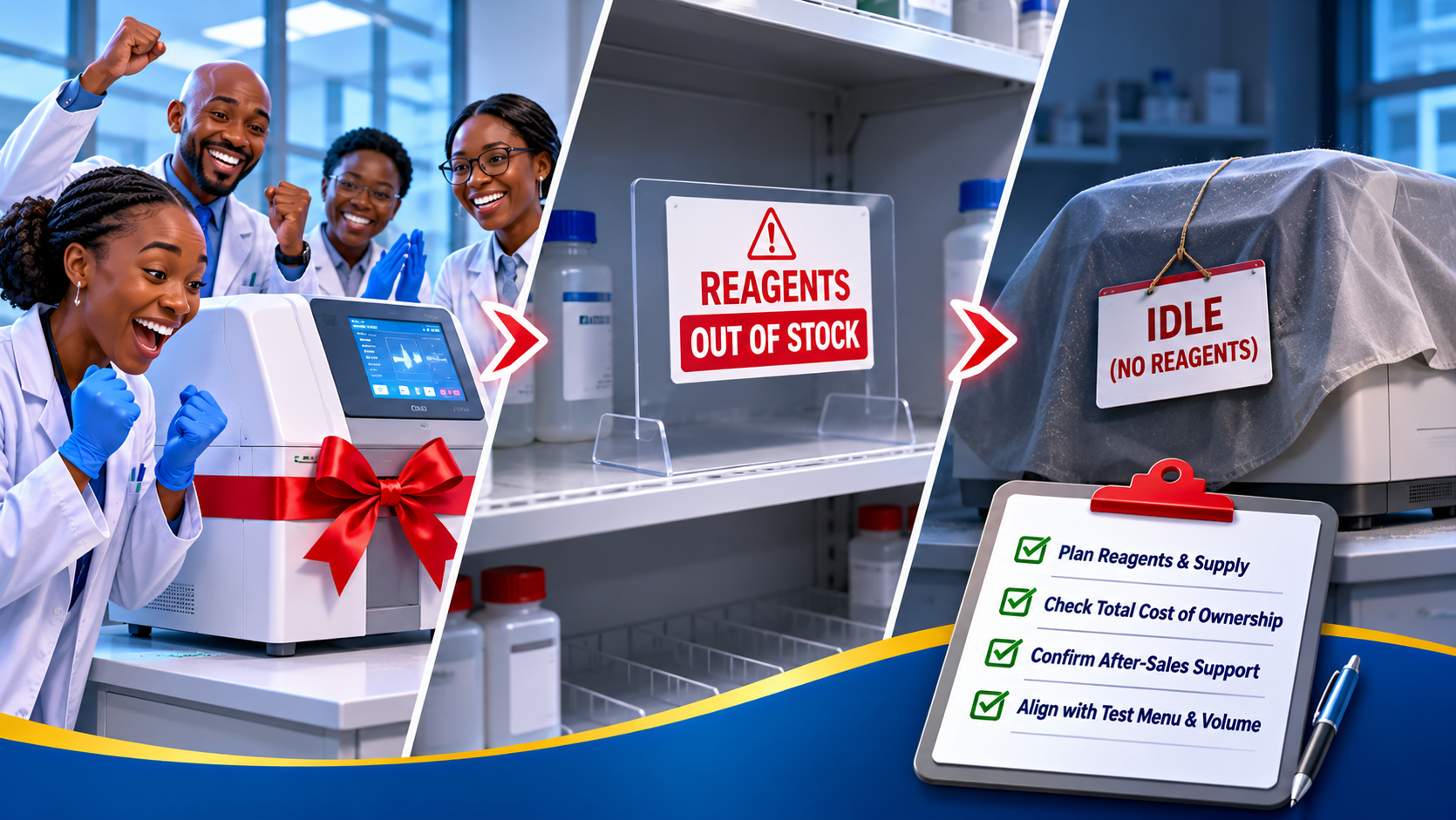
A hospital buys a brand-new biochemistry analyser. It arrives on time, it looks impressive, and the team is excited.
Three months later, the reagents run out. The supplier has nothing in stock, and restocking will take eight weeks. The machine sits idle while the patients keep coming.
The machine wasn’t the problem. The way it was bought was.
Buying lab equipment isn’t just a procurement exercise. It’s a decision about your clinical service for years to come. Here’s how to get it right.
1. Start With Your Patients, Not the Brochure
What tests do you refer out today? How many samples do you run each day? Who are your patients: outpatient, emergency, maternity, paediatric?
A clinic running 40 samples a day and a referral hospital running 400 need very different machines, even from the same catalogue.
2. Look Beyond the Price Tag
The purchase price is only the start. Over the machine’s life, reagents, maintenance, training and downtime usually cost far more than the machine itself.
Saving KES 200,000 at purchase isn’t a bargain if it costs you more every year in reagents and repairs. That’s a budget leak disguised as a good deal.
3. Make Sure Help Is Nearby
Ask every supplier:
🔧 Is your engineer based in Kenya?
⏱️ How fast will you respond when the machine breaks down?
📦 Do you keep spare parts and reagents in stock locally?
A reliable supplier answers these questions straight away.
4. Insist on Proper Training
An installed machine isn’t the same as a working one. Your team needs training on daily use, quality control and basic troubleshooting, plus refresher sessions when new staff join.
A well-trained team makes a machine last longer, and makes every result more reliable.
5. Think Accreditation From Day One
If you’re working towards ISO 15189 or KENAS accreditation, choose equipment and a supplier that can support your documentation and QC requirements from the start. Fixing it later is costly and stressful.
Choose a Partner, Not Just a Vendor
A vendor processes your order and moves on. A partner reminds you when reagents are about to expire, schedules maintenance before you have to call, and knows your lab manager by name.
The best equipment decision is the one that still looks smart on day one thousand.
Let’s Build a Lab That Lasts
For over 22 years, Sam-Tech Diagnostics has helped East African facilities choose, install and run the right equipment, with local engineers, locally stocked reagents and hands-on training for your team.
Before you sign your next LPO, talk to us. We’ll help you match the right analyser to your patients, workload and budget.
👉 Book a consultation or request a quotation
📞 +254 733 627 834
✉️ info@sam-techdiagnostics.com
Sam-Tech Diagnostics: Simple, Precise & Accurate.