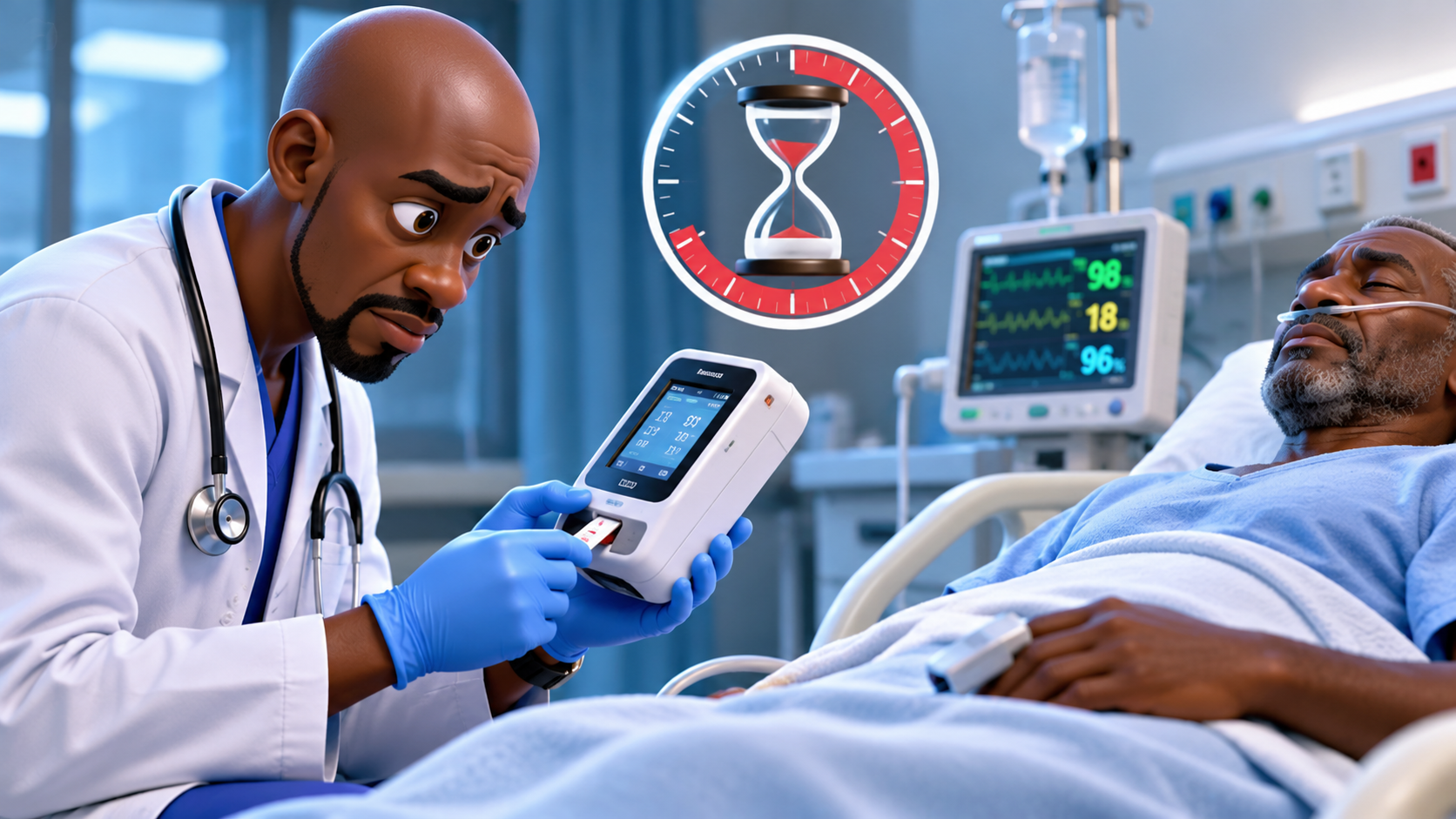
A patient arrives in casualty with fever and a fast heartbeat. Their blood pressure looks fine and they’re talking clearly. They seem stable.
Two hours later, they’re in septic shock.
The warning was there all along, quietly building in the blood. Nobody measured it.
Meet Lactate
When the body’s cells don’t get enough oxygen, they switch to a back-up energy system. The by-product of that switch is lactate.
A rising lactate level is the body’s way of saying “something is wrong, and it’s getting worse”, often before blood pressure drops or the patient looks unwell.
That’s why lactate matters in:
🩸 Sepsis, one of the leading causes of death in hospitals
🚑 Trauma and major bleeding
🫀 Shock and heart failure
🏥 Post-surgery recovery
Why Timing Is Everything
International sepsis guidelines recommend measuring lactate within the first hour of a suspected case, then repeating it to check whether treatment is working.
In practice, many Kenyan facilities either don’t test lactate routinely or wait too long for the result. By the time the number comes back, the patient’s condition has already changed.
A lactate result is only useful while there’s still time to act on it.
The Simple Shift That Saves Lives
The fix isn’t complicated: bring the test to the patient.
A point-of-care blood gas analyser at the bedside measures lactate alongside oxygen, carbon dioxide and electrolytes in minutes. The clinician gets one clear picture and can act straight away.
Two analysers we place in Kenyan hospitals do this well:
✅ i-SmartCare 10 is built for ICU, theatre, renal units and NICU. It gives results in 50 seconds from a tiny blood sample, and its full panel includes lactate and glucose.
✅ PocTell is built for emergency, casualty and outreach. It’s battery-powered, ready on arrival and needs no cold storage for its cartridges, so it can go wherever the patient is.
The Question Worth Asking
Ask your team: how long does it take us to get a lactate result for a suspected sepsis patient?
If the answer is “we don’t usually test it” or “over an hour”, that’s your opportunity.
Let’s Close the Gap
Sam-Tech Diagnostics will visit your facility, review how your critical care and emergency teams test today, and recommend the right setup for your unit.
👉 Book a demo or request a quotation
📞 +254 733 627 834
✉️ info@sam-techdiagnostics.com
Sam-Tech Diagnostics: Simple, Precise & Accurate.